Never heard of it? Don’t worry I hadn’t either. Even some of the Spanish people I’ve spoken to have had no idea where it is.
Location
Huelva is a small, industrial city in the southern comunidad autónoma of Andalucía. It’s about 40 minutes away from the border of Portugal and is a short drive from the beach. As the city is so small, it doesn’t have an airport, so you have to fly to either Sevilla or Faro. Thankfully there are plenty of transport links to travel from these cities to Huelva. Andalucía is known for its beautiful weather, and this was one of my favourite things about Huelva. Winter lasted for about 2 months and the rest of the time it was so warm!
History
Although many people have never heard of Huelva, it has played an important role in many parts of history. Huelva has a huge port, but its industry is mainly based around agriculture and mining. The Rio Tinto mines, owned by the Anglo-Australian Rio Tinto group (the world’s second largest metals and mining corporations), have been used for over a thousand years and are said to have been one of the main sources of copper and other resources during the Roman Empire. Tourists are now able to take a train around the mines to see the bright red waters (the red colour coming from the high levels of iron and other heavy metals in its chemical makeup).
During World War 2, Britain successfully deceived the Nazis through ‘Operation Mincemeat’. British intelligence officers used the corpse of Glyndwr Michael, a welsh tramp, to provide the Germans with a fabricated plan of action. They gave him a fake identity (William Martin), a believable backstory and attached a case filled with fake documents. Why am I talking about this? Though Spain were neutral during the war, much of the military was pro-German and Britain were well aware of this. The Royal Navy dropped the body off the Spanish coast and guess where it was found? That’s right, Huelva. Who would’ve thought? Long story short, the Nazis gained access to the case attached to ‘William Martin’ and moved their troops around, meaning they were not prepared when 160,000 allied soldiers invaded Sicily in 1943. The success of this operation saved thousands of lives, helped with the downfall of Mussolini and played a part in an Allied victory. I found this really interesting. It may seem like an insignificant fact, but who knows how things would’ve played out if Glyndwr Michael was found on a different city’s coastline. That’s all the history knowledge I’ve got.
Language
The best way I can describe the feeling I had when I first listened to the Spanish in Huelva is through this story. I have a friend from Switzerland who speaks a very high level of English, like C2 level. One time, we listened to a preach by a Scottish man. I tried discussing the preach with her, because she looked a bit confused, only to find out she hadn’t understood a single word that had come out of his mouth. Now imagine not having a super high level of Spanish and moving to the Glasgow of Spain. Yep.
Andalucía in general has a noticeable accent (they drop all of their S’s), which is hard enough. But the accent in Huelva takes this further. They speak EXTREMELY fast which means there is little time to enunciate anything. So, no S’s and no clear pronunciation. Not the best place to improve your Spanish, but I’ve been told ‘if you can understand the Spanish here, you can understand any Spanish anywhere’, so I guess that is a plus. I apologise in advance to my lecturers for the terrible accent I will have when I’m back at university. So overall, the accent took some getting used to, but it was okay in the end.
Food and drinks
There’s a saying ‘era más de Huelva que un choco’ (there is more to Huelva than cuttlefish) and its true. There’s also gambas (prawns) and calamares (squid). The first thing I heard when I arrived in Huelva was ‘you have to try the choco here’ – I can understand why people from Huelva are referred to as Choqueros. There is a huge variety of seafood available at almost every tapas bar/restaurant as well as plenty of meat (mainly beef and pork) options. Not being the biggest fan of Spanish food meant I was VERY thankful for the few Italian restaurants and the fast food chains. When I really missed home, I’d go to Sevilla to get a Five Guys (it was so good).
When I first moved to Huleva I didn’t understand how people could work all day and then spend all evening/night in the plaza, drinking and socialising. I soon learnt that these people were running on coffee. A lot of it. I’m not the biggest fan of coffee, unless it’s really sweet, but I often went for coffee with my colleagues during recreo. The coffees were tiny but so strong. A lot of the teachers claimed to have up to 5 coffees a day. Crazy. When we weren’t drinking coffee, we were drinking alcohol. In Huelva, drinks are really cheap and really strong. I think that speaks for itself.
My favourite places
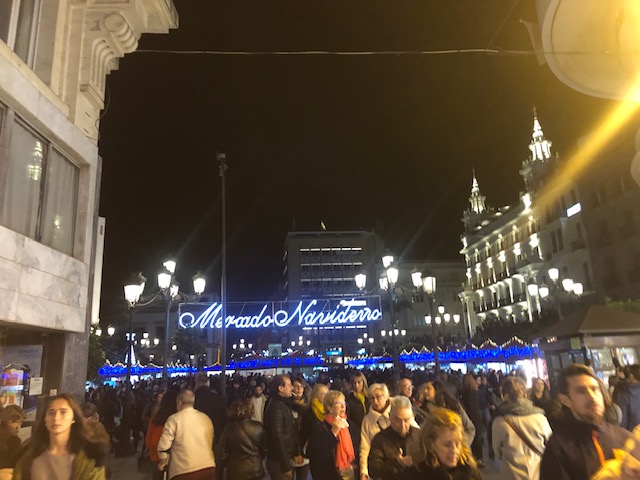
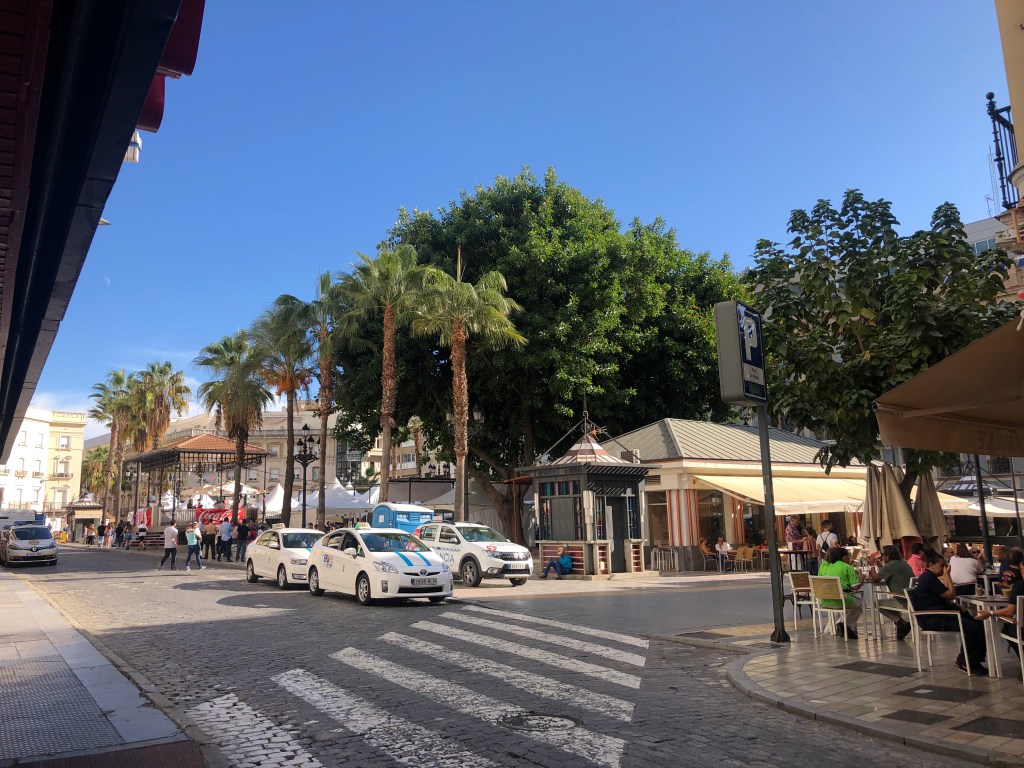
I think my favourite thing about Huelva is Plaza de las Monjas, the main square. It was always full of people, and during the evenings there would be children playing everywhere. There was a huge sense of community, everyone knew each other, the bars and restaurants were overflowing with people and this created an atmosphere you don’t get to experience in a big, tourist city.
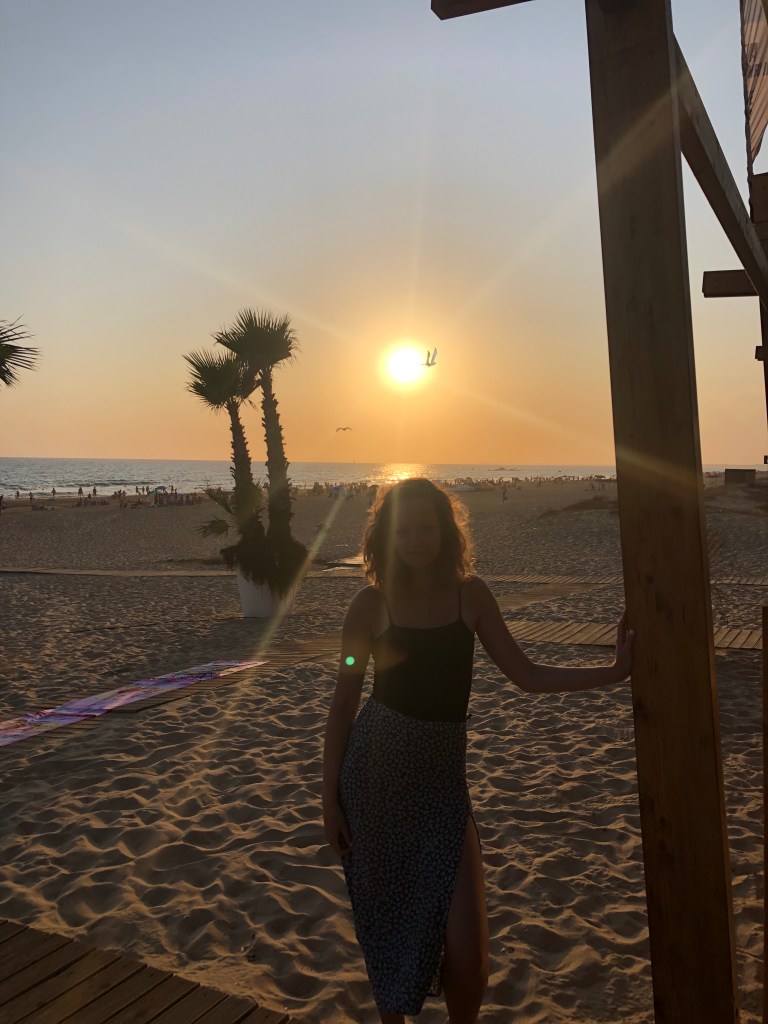
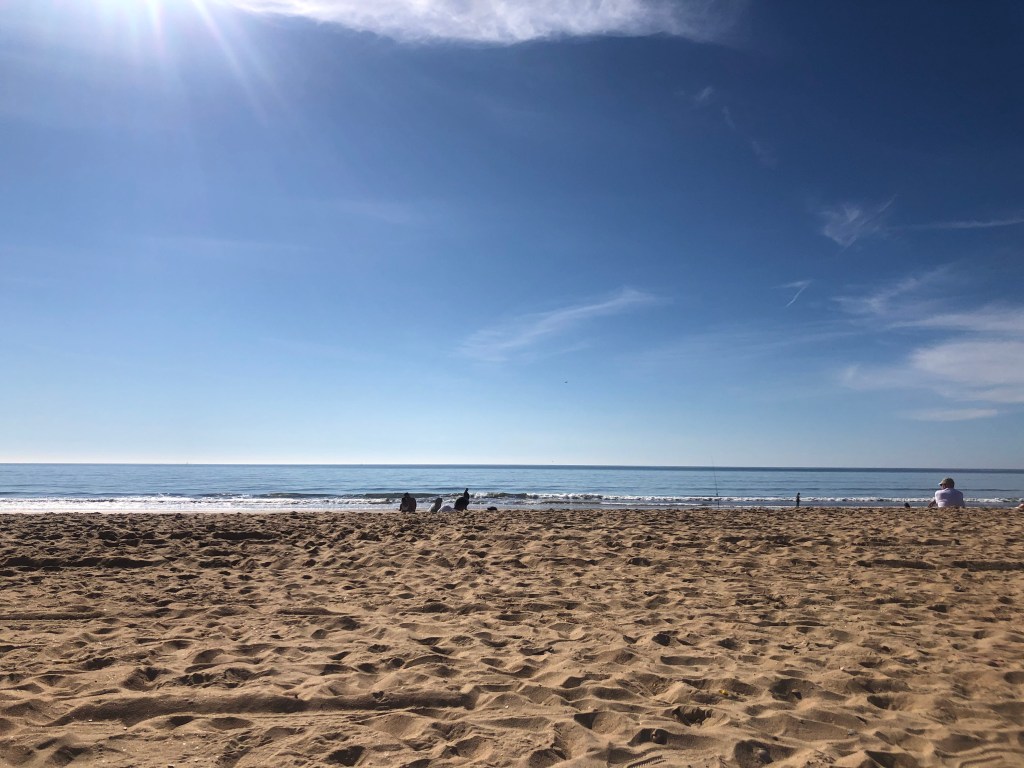
I had the privilege of working in a school that was right on the beach. I spent so many afternoons sunbathing after work, it was great. As soon as it started to get warmer, me and my friends would spend whole days in Punta Umbría relaxing on the beach.

 Jess's year abroad blog