Andalucía is full of so much history and culture, I’m so lucky that I always have a three-day weekend so I have plenty of free time to travel and make the most of this year. In late November, me and my friends decided to visit Córdoba. It took 3 and a half hours to get there (a bus from Huelva to Seville and then a Bus from Seville to Córdoba), travelling by bus everywhere is so cheap and you can literally go anywhere. We got to the city quite late in the evening so we got some food and then had an early night.
The next day we visited La Mezquita-Catedral de Cordoba. This Mosque-Cathedral is by far one of the most beautiful monuments I’ve ever seen.
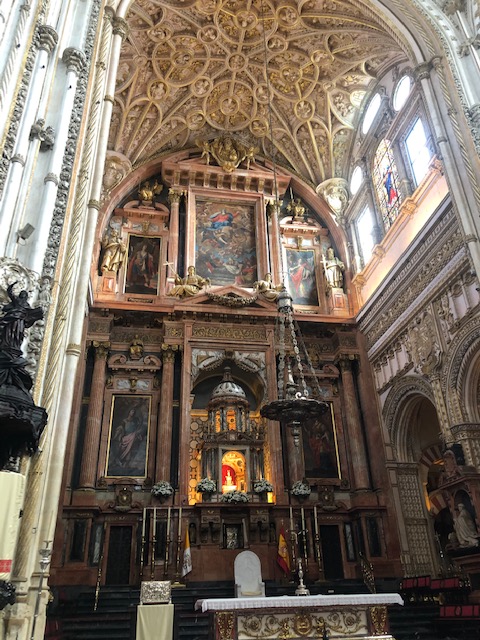
I had been teaching my students about the Islamic conquest of Spain and La Mezquita-Catedral was an excellent physical representation of this history. ‘According to a traditional account, a small Visigoth church, the Catholic Basilica of Saint Vincent of Lérins, originally stood on the site. In 784 Abd al-Rahman I ordered construction of the Great Mosque, which was considerably expanded by later Muslim rulers. Córdoba returned to Christian rule in 1236 during the Reconquista, and the building was converted to a Roman Catholic church.’ (Wikipedia explains this better than I could – https://en.wikipedia.org/wiki/Mosque%E2%80%93Cathedral_of_C%C3%B3rdoba)
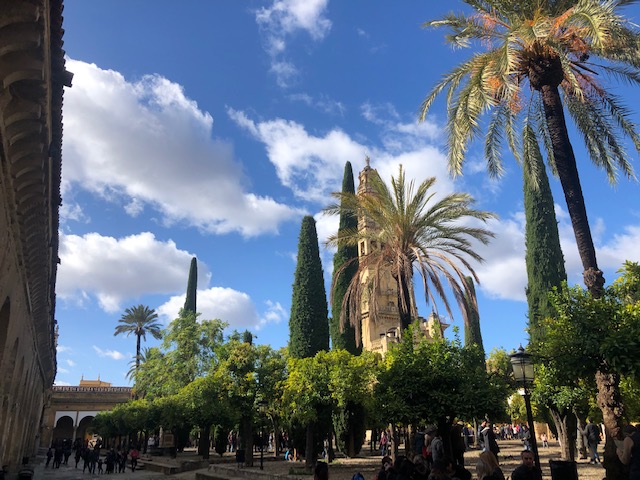
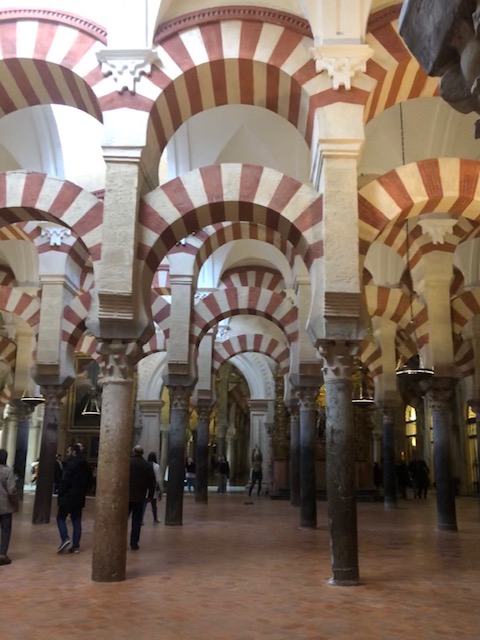
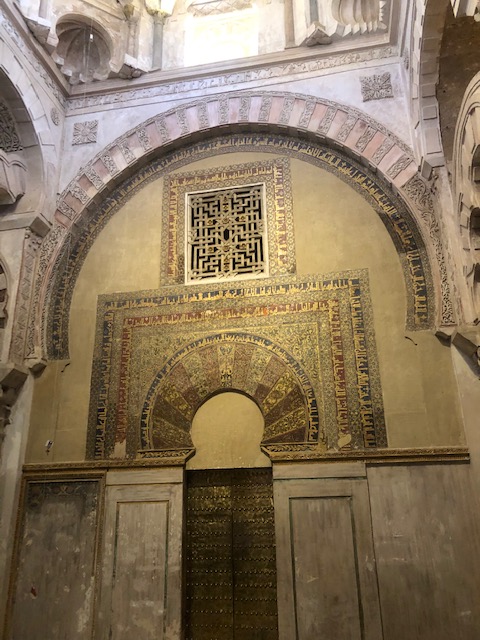
It was so interesting to see the combination of Islamic and Catholic features all around the structure. For example, hidden amongst the many chapels you could find the Mihrab which indicates the Qibla wall (the wall Muslims face to pray, as it faces Mecca). Throughout the building there are horseshoe arches, a clear element of Islamic architecture, which were just amazing to look at. The minaret had been changed into the cathedral’s bell tower. One of my favourite parts was the patio filled with orange trees, I’ve seen quite a few of these outside of Cathedral buildings in Spain which shows us how far the Islamic conquest reached.
It was really interesting to see how the catholic church had taken the mosque and made it into a cathedral, however, after learning about the structure of a mosque, in my opinion, there is an overwhelming presence of Islamic architecture, which I was much more intrigued by than the catholic redesign.
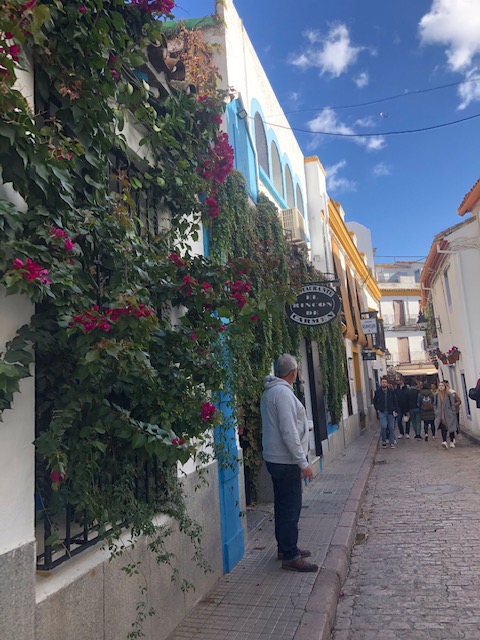
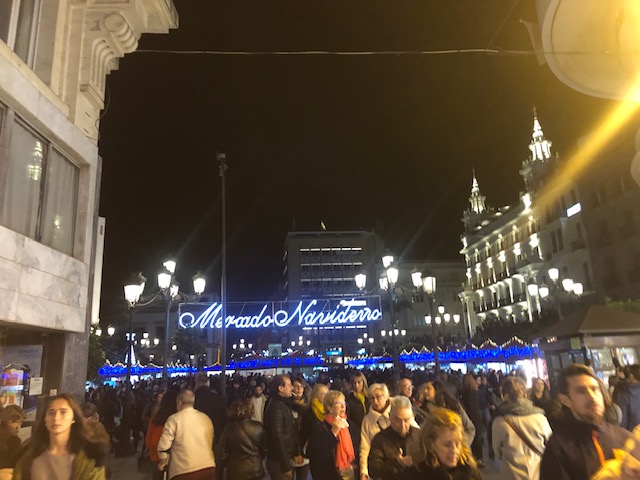
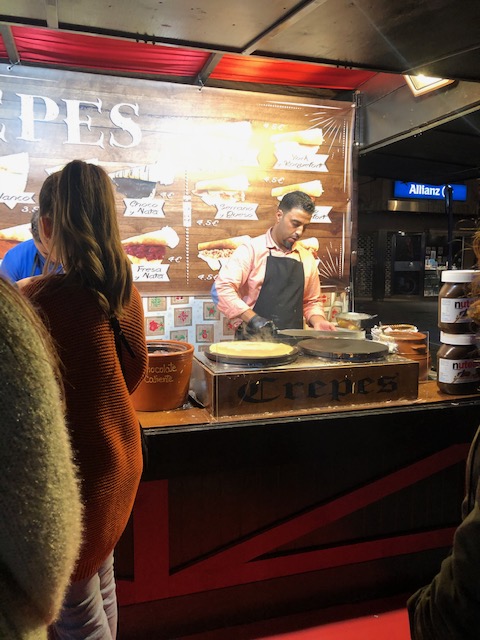
After this, we wandered around the streets. All the buildings were white with bursts of colour (perfect for Instagram photos). But, I think my favourite part of the whole trip was spending time at the Christmas market. Not only because they had the most delicious crepes, but because we were able to learn so much about Spanish Christmas traditions just by looking at all the different stalls and the products they had to offer. A very popular tradition in Spain is to build a nativity scene, every year people will buy a new piece to add to it. But the tiniest pieces are so expensive because they are all handmade. They had a huge nativity set up that you could look at, it was so incredibly detailed.
That night we went out out. We happened to find ourselves in a club that played rock n’ roll music along with some cheesy classics. After hearing only reggaetón for many nights out, I was absolutely over the moon to do the WMCA. And like any Spanish night out, we got home when the sun was rising. In the morning, those of us who were able to function, explored the other side of the city and spent a few hours playing UNO in a café.
Honestly, I loved this city and I hope I can visit it again before the end of my year abroad!
 Jess's year abroad blog